
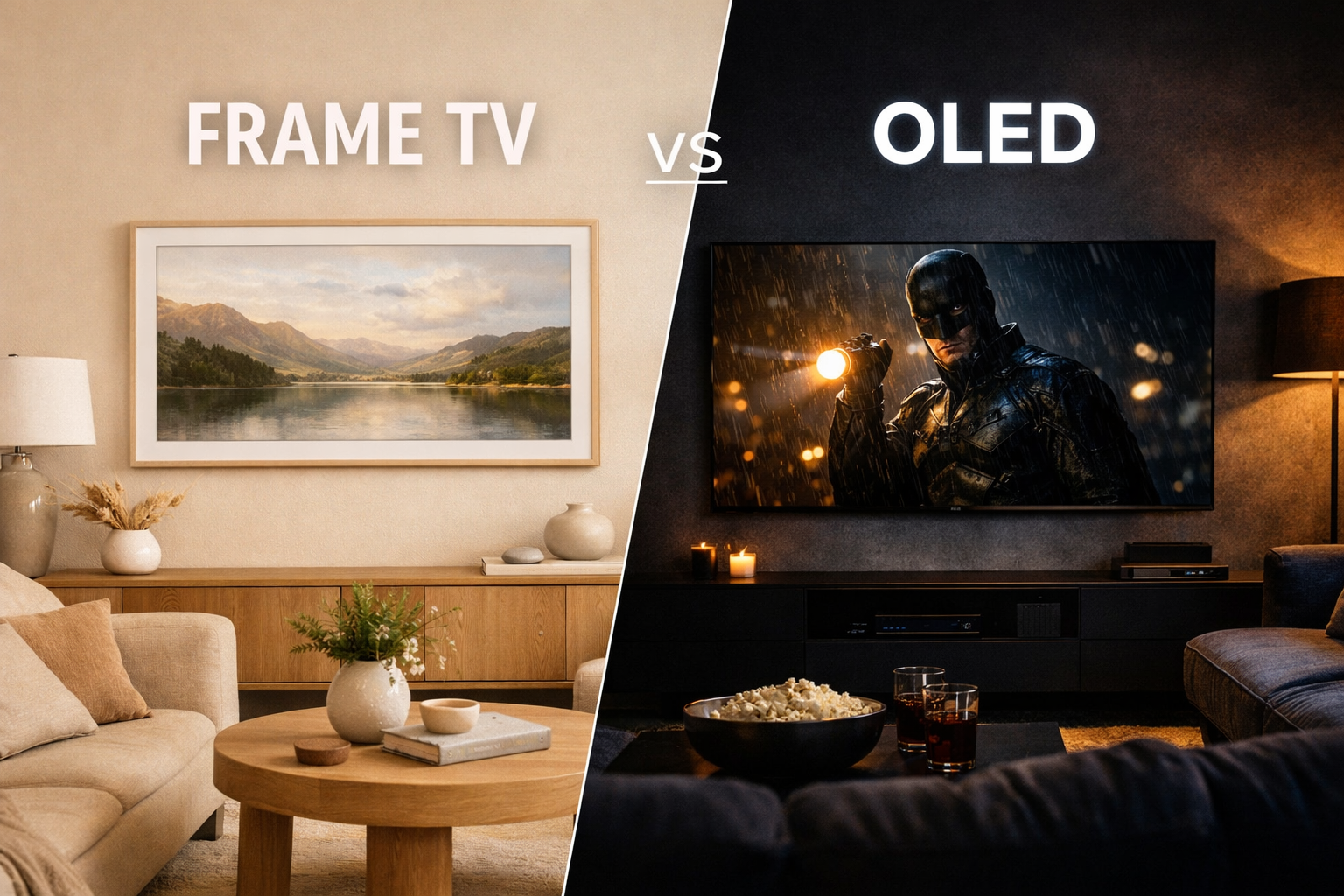
When you’re upgrading your living room centerpiece, the choice between design-forward style and pure picture powermatters.
On one hand, you have a television that doubles as wall art. On the other, you have displays that deliver cinema-level visuals with inky blacks. Which one should you choose?
Below, we break down how Samsung The Frame QLED 4K Smart TV and Samsung The Frame Pro Neo QLED 4K Smart TV stack up against top OLED models like the LG OLED evo AI C5 4K Smart TV and Samsung OLED 4K S95F Smart TV — so you can pick what’s truly worth your space and your bucks.
What Makes The Frame Unique
The Frame is more than a TV. When it’s off, it displays artwork or your own photos with a matte finish that mimics real art on the wall. Plus, its customizable bezels make it look like a piece of décor, not a screen.
- Art Mode elevates idle hours
- Matte screen reduces glare
- Clean wall presence
f your living room aesthetic is quiet luxury meets tech, The Frame instantly elevates the vibe.
However, it’s still a QLED-based panel, meaning it uses LED backlight tech — so while the colors and brightness are great, it doesn’t match OLED contrast and black levels.
What OLED TVs Bring to the Table
OLED (short for Organic Light-Emitting Diode) delivers self-lighting pixels, meaning each pixel turns off completely for perfect blacks and incredible contrast.
Here are a few standout OLEDs worth considering:
- LG OLED evo AI C5 4K Smart TV · Balanced performance, excellent contrast, brighter output for well-lit rooms
- Samsung OLED 4K S95F Smart TV · Top-tier QD-OLED with vibrant color
- Samsung OLED 4K S90F Smart TV · Strong all-rounder OLED
- LG OLED evo AI G5 4K Smart TV · Bright, high-contrast flagship
OLED TVs excel at:
- Infinite contrast
- Deep, true blacks
- Wide viewing angles
- Cinematic HDR performance
In short, they redefine immersion.
Design Comparison
The Frame is about integration: it blends into your décor and elevates the room as art between shows. That’s a win if your space is thoughtfully styled or minimalist.
OLED TVs are generally sleeker and slimmer, but they’re still recognizably a TV — they don’t disguise themselves as wall art.
So if design continuity is everything, Frame wins here.
Picture Quality: OLED Takes the Crown
When comparing pure visuals:
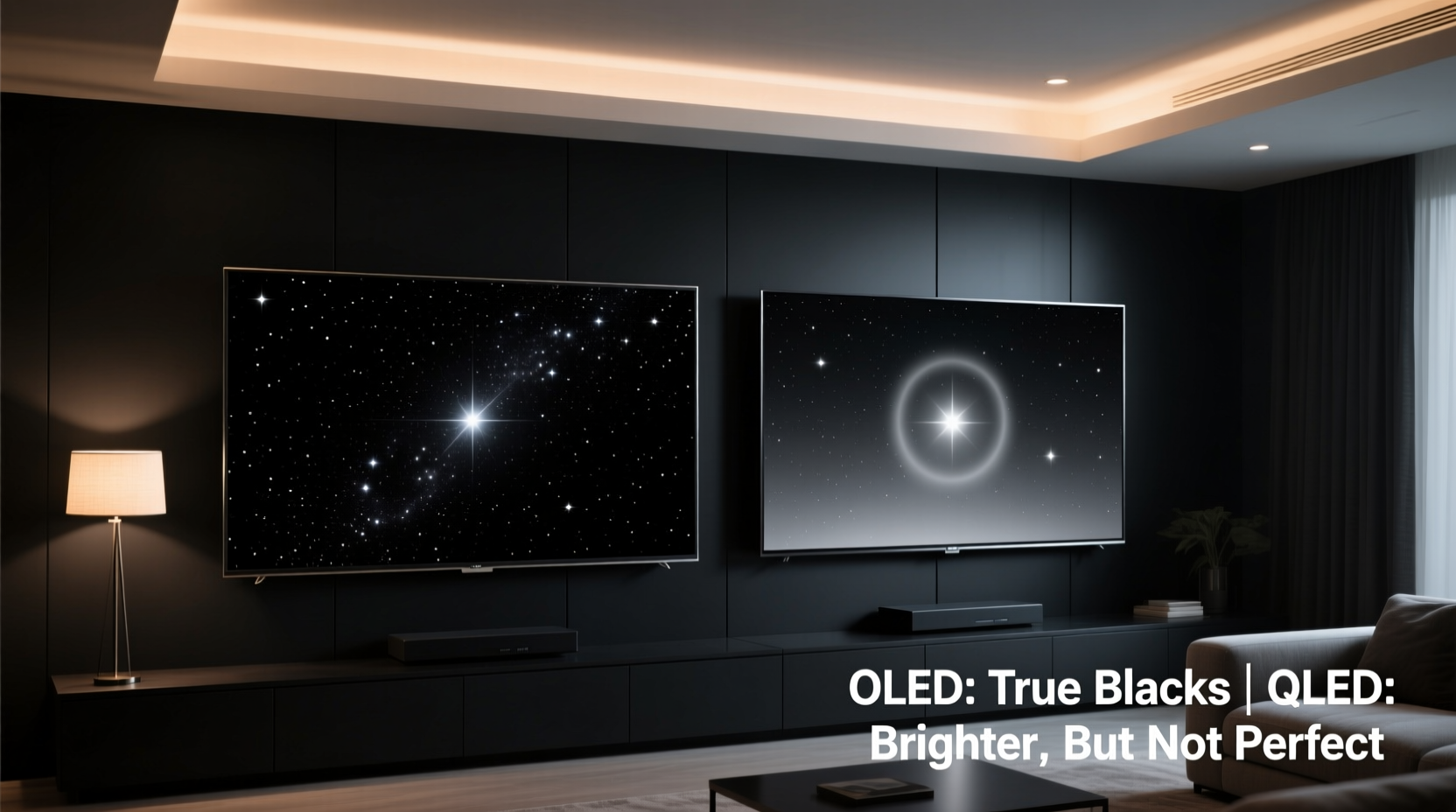
- OLED displays offer near-infinite contrast for true blacks and dramatic depth not possible on QLED displays.
- OLED is generally better for dark-room movie nights and shows subtle detail.
- Frame TVs look great in daylight thanks to anti-reflective screens — but OLED’s color and depth still outshine them.
In short: OLED TVs almost universally beat Frame TVs on pure picture quality.
Gaming & Features
If you game or use next-gen consoles:
- High-end OLEDs often support higher refresh rates and top-tier responsiveness.
- Frame TVs still do gaming fine… but they’re usually not as optimized as flagship OLEDs.
OLED wins again if gaming matters.
Value & Price
The Frame typically costs less than flagship OLEDs, especially considering it serves as both TV and décor.
OLED costs more upfront, but delivers unmatched picture performance for movies, shows, and gaming.
Here’s a simple way to think about it:
| Feature | Frame Series | OLED TVs |
|---|---|---|
| Picture Quality | Excellent QLED | Best – OLED blacks & contrast |
| Design | Built-in Art Mode | Sleek, modern TV look |
| Decor Impact | High | Moderate |
| Gaming & Motion | Good | Excellent |
| Price | Mid | Premium |
Below are visual cues to help you imagine the vibe in your space:


So… Which Should You Pick?
Choose a Frame TV if:
- Design & décor matter just as much as the TV
- You like art or personal photos displayed when off
- You want a conversation piece
Choose OLED if:
- Picture quality is your top priority
- You watch movies/series in varied lighting
- You want top gaming performance
✨ In other words:
Frame = Artful Tech
OLED = Cinematic Performance
Both are excellent — just different kinds of excellence.
Would you rather have your TV blend into your space…
or be the screen that brings everything to life?
Leave a Reply