
I used to think my skin was just “difficult.”
No matter what body wash I bought, no matter how expensive the shampoo, no matter how many times I switched moisturizers, something always felt slightly off. My skin felt tight after every shower. My hair looked dull by day two. Some mornings, I could still smell chlorine on my skin, which is not exactly the quiet luxury vibe I’m going for.
At first, I blamed the products.
Then I realized the problem might not be what I was putting on my body.
It might be the water itself.
That was the shift.
Because once you start paying attention to your shower water, you notice everything. The dryness. The frizz. There is a mineral buildup on the glass. The way your hair color fades faster than it should. The way your skin somehow feels both clean and irritated at the same time.
And suddenly, a shower filter stops sounding like one of those unnecessary “wellness upgrades” and starts feeling like one of the smartest home investments you can make.
The problem is that not that all shower filters actually work.
Some are beautifully packaged disappointments.
Some are basically decorative plumbing.
And some genuinely change the way your skin and hair feel within a couple of weeks.
That difference matters.
Especially when you’re spending money on products designed to repair damage your water may be causing every single day.
According to the Environmental Working Group and multiple public water reports, chlorine remains one of the most common disinfectants used in U.S. public water systems. While it serves an important purpose in sanitation, it can also cause dryness and irritation for some people, depending on skin sensitivity and local water quality.
If you’re not sure what’s actually in your water, there are a couple of easy ways to find out. Many cities and towns publish annual water quality reports online. Just search for your city name plus “water quality report.” These usually detail exactly which chemicals and minerals are present and at what levels. You can also pick up a simple home water test kit from a hardware store or online, which tests for basics like chlorine, hardness, and pH right at your tap. Knowing what you’re working with makes it much easier to choose the right filter for your needs.
Chlorine is widely used in public water systems for sanitation, but it can also contribute to dryness and irritation depending on your skin type. According to Wikipedia, it remains one of the most common disinfectants used in municipal water systems.
That doesn’t mean your water is unsafe.
It means your shower experience may be working against your beauty routine.
And if you’re someone who cares about intentional living, fewer better things, and investing once instead of constantly replacing, this conversation matters.
If you’re refining your routine with fewer, better upgrades, you might also appreciate our guide to a soft skin routine after shower that builds on the same idea of working with your body, not against it.
Because sometimes the real upgrade isn’t another serum.
It’s the water touching your skin twice a day.
Let’s talk about which shower filters really work and which ones are just pricey showpieces.
Why Your Shower Water Matters More Than You Think
Most people think about skincare from the outside in.
Better cleanser. Better moisturizer. Better hair mask.
But almost nobody starts with the thing touching them first.
Water.
And honestly, that’s a little wild.
Because if your shower water is full of chlorine, heavy minerals, and sediment, your expensive products are basically trying to win an argument after the damage has already happened.
Let’s start with chlorine.
Chlorine exists for a good reason. It helps disinfect public water and keeps harmful bacteria under control. I’m not here to villainize clean water. We like clean water. We support clean water.
But chlorine can also be drying.
Mine included.
Then there’s hard water.
This is where calcium and magnesium show up, much like guests you didn’t invite.
Hard water leaves mineral deposits behind. On your shower glass. On your faucets. On your hair. On your skin.
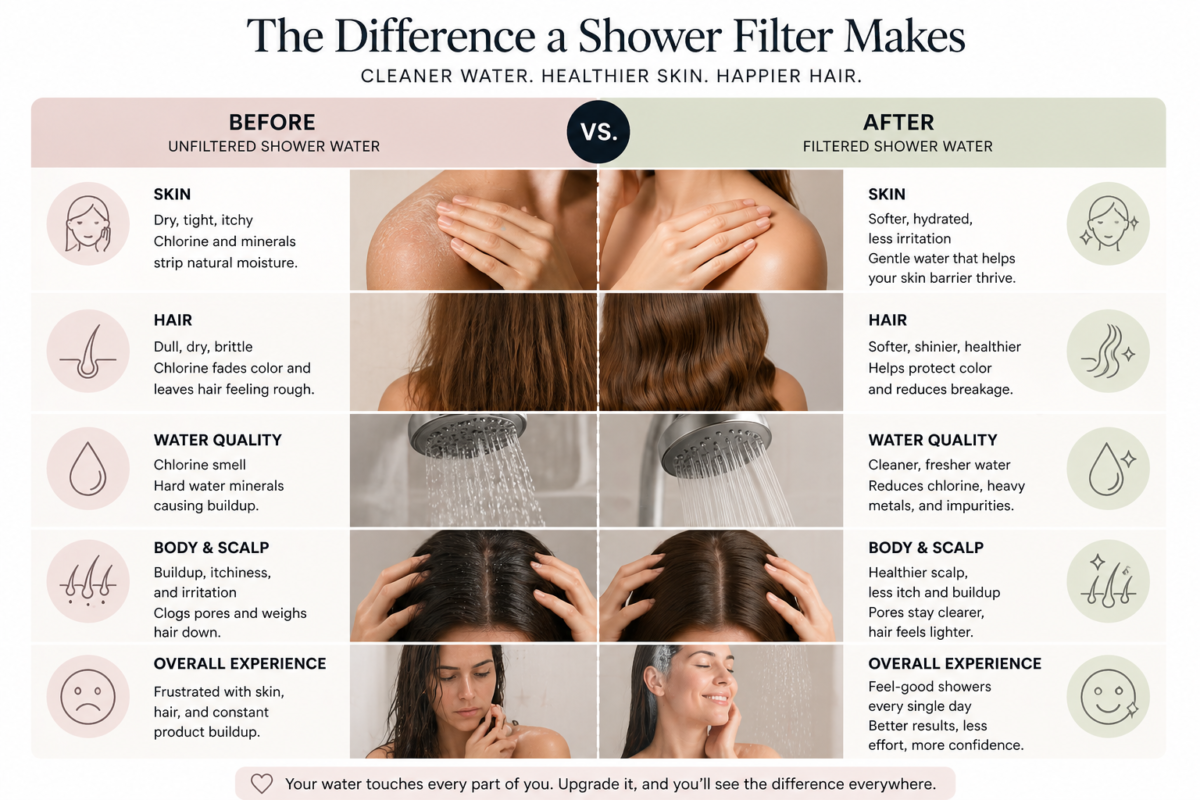
That buildup can make hair feel rougher, flatter, duller, and harder to manage. It can also leave skin feeling dry or like your body wash never fully rinses off.
If you’ve ever stood in the shower wondering why your conditioner suddenly betrayed you, hard water may be the reason.
There’s also sediment, rust particles, and, in some areas, trace amounts of heavy metals, depending on older plumbing systems.
Again, not panic territory.
Just information.
And information is expensive if you ignore it long enough.
A shower filter is not the same thing as a whole-house filtration system.
Whole-house systems are incredible, but they also cost enough to make you suddenly become “grateful for simple things.”
A shower filter is the practical middle ground.
It targets the water you use most intimately on your skin, scalp, and hair without requiring major plumbing changes or a second mortgage.
That’s why I like them.
They’re accessible.
They’re useful.
And unlike some “luxury” wellness purchases, they solve a problem you can actually feel.
Especially if you deal with:
- dry skin
- sensitive skin
- eczema flare-ups
- color-treated hair
- excessive frizz
- dull hair
- chlorine smell after showers
- hard water buildup
Notice I said “may help,” not “will save your life and fix your taxes.”
Because this is not medical advice.
This is practical home care.
And honestly, sometimes the quietest luxury is just stepping out of the shower without feeling like your skin filed a complaint.
What Makes a Shower Filter Actually Work
This is where people get tricked.
Because every shower filter claims it’s revolutionary.
Every listing says things like “spa quality,” “ultimate purification,” and “transformative wellness technology,” which usually translates to: we used a lot of adjectives and hope you stop asking questions.
Please keep asking questions.
Because filtration matters.
Not all filters do the same job.
The first thing to understand is activated carbon.
This is one of the most common filtration methods, and it’s great for helping reduce chlorine and improving odor. If your water smells like a public swimming pool, activated carbon is usually part of the answer.
Then there’s KDF-55.
This sounds like a robot from a Marvel movie, but it’s actually a filtration medium made from copper and zinc.
KDF helps target chlorine, certain heavy metals, and bacterial growth inside the filter itself. It’s one of the reasons higher-quality filters tend to perform better over time.
Then we have ion exchange.
This is often used for addressing hard water minerals like calcium and magnesium. It doesn’t magically turn your house into a mountain spring, but it can help reduce the mineral-heavy feeling that makes hair and skin feel coated.
The best systems are usually multi-stage.
This means they use several methods together, rather than just making big promises and relying on pretty photos.
That’s what you want.
Not one hero ingredient.
A competent team.
Also, pay attention to cartridge replacement.
Because a cheap filter that needs constant replacement is basically a subscription in disguise.
Most good filters need to be replaced every 6 to 12 months, depending on usage and water quality.
That’s reasonable.
If something says “replace monthly,” I would like to respectfully decline.
Flow rate matters too.
Some filters work beautifully but make your shower pressure feel like a sad hotel.
No, thank you.
A good system should improve quality without leaving you feeling mistreated by disappointment.
And finally, look for certifications like NSF or WQA when possible. NSF (National Sanitation Foundation) and WQA (Water Quality Association) certifications indicate that a filter has been independently tested and verified for its ability to reduce specific contaminants. These marks indicate that a product does what it claims, so you can feel more confident in your purchase.
Not because labels fix every problem, but because I’d rather have proof than just take someone’s word for it.
The biggest myth?
A shower filter removes everything.
It doesn’t.
It targets specific issues.
Chlorine? Yes.
Odor? Often yes.
Some heavy metals? Potentially.
Every possible contaminant known to mankind? No.
That requires a much bigger system.
The goal here is improvement, not perfection.
And honestly, that’s true for most worthwhile things.
Including skincare.
Including relationships.
Including picking out a shower filter without getting overwhelmed while shopping online late at night.
We’re aiming for better.
Not fantasy.
And better is usually enough.
Shower Filter Comparison Table
Before buying anything, this is the part that matters most: knowing what each filter is actually designed to do.
Because the ‘best’ choice depends on your water, your skin, and how often you’re willing to replace cartridges.
Here’s the comparison table I’d actually use before spending money.
| Aqua Homegroup Luxury Shower Filter System | $35–$60 | Multi-stage (KDF + Activated Carbon + Far-Infrared) | Sensitive skin + luxury bathrooms | Strong multi-stage filtration, premium design, better long-term investment |
| Canopy Filtered Showerhead | $150–$250 | Multi-stage filtration + chlorine reduction | Sensitive skin + beauty-focused routines | Strong aesthetic appeal, trusted brand, excellent for skin and hair wellness |
| AquaBliss High Output Shower Filter | $35–$50 | KDF-55 + Activated Carbon | Mid-range value + balanced performance | One of the best “worth the money” options without overspending |
| Sprite Shower Filter (High-Capacity Model) | $25–$45 | Chlorine + Odor Removal | Budget-conscious buyers | Reliable entry point, especially for chlorine-heavy city water |
Quick Comparison Notes
Aqua Homegroup Luxury Shower Filter System
This is the “buy it once and stop thinking about it” option.
It works especially well for people dealing with dry skin, chlorine irritation, and hair that feels coated or dull. The multi-stage setup is stronger than most basic filters, and the design feels elevated rather than like emergency plumbing from aisle seven.
Best for people who treat home upgrades like investment pieces.
Not cheap.
But neither is replacing your entire hair routine every three months.
Canopy Filtered Showerhead
The Canopy Filtered Showerhead works especially well for people dealing with dryness, sensitivity, and that constant “why does my skin feel worse after I shower?” frustration. It focuses heavily on chlorine reduction, which makes it a strong choice for supporting your skin barrier and helping color-treated hair last longer.
What I like most is that it doesn’t look like a utility purchase. It looks intentional. Clean design, elevated finish, and something that actually fits a modern bathroom instead of looking like it was borrowed from a hardware aisle panic purchase.
It’s also one of the easier filters to maintain. Replacement cartridges are simple to swap and usually cost around $35–$55, with most households replacing them every 3 months, depending on water quality and how often the shower is used.
Yes, that replacement schedule is more frequent than some larger systems, but for people prioritizing skin, hair, and daily comfort, the trade-off often feels worth it.
Best for people who want their wellness upgrades to actually feel luxurious not just technically functional.
Because if you’re going to invest in your routine, it should look good too.
AquaBliss High Output Shower Filter
This is probably the smartest value option for most people.
It delivers strong chlorine reduction, a better water feel, and noticeable skin improvements without entering “why did I spend this much on water?” territory.
It’s the one I recommend when someone wants real results while still remaining financially stable.
Which feels responsible.
And rare.
Sprite Shower Filter
Simple. Reliable. Affordable.
If your main issues are chlorine smell and basic dryness, not severe hard-water buildup, this is a strong starter option.
It won’t do everything a premium multi-stage system can do, but it absolutely beats pretending your water isn’t the problem.
Sometimes the best first step is just starting.
Not waiting for the perfect one.
Installation, Maintenance, and What to Expect
Most shower filters are surprisingly easy to install, and the process usually takes less than 15 minutes.
In most cases, the filter simply screws onto your existing shower arm or connects directly between your shower arm and shower head. No plumber. No dramatic renovation. No emotional support contractor standing in your bathroom charging by the hour.
The biggest thing to check first is compatibility. Most homes use standard fittings, but if you have an older fixture or a more custom shower setup, it is worth double-checking measurements before ordering. Nothing ruins a “quick upgrade” faster than realizing your bathroom speaks a different plumbing language.
Maintenance is simple, but it matters. Most filters need a cartridge replacement every 6 to 12 months depending on water quality, usage, and the specific model. If you have very hard water or multiple people using the same shower every day, replacements may happen sooner.
You will usually notice the signs. Chlorine smell starts creeping back. Water pressure changes. Your skin feels tighter again. Your hair starts acting like it has trust issues.
That is usually your filter politely asking for retirement.
Over five years, the real cost of ownership matters more than the original purchase price. A cheaper filter with constant replacements can end up costing more than a better system that lasts longer. That is why I always look at the long game first.
Because the goal is not just buying a shower filter.
It is buying the right one once.
If you’re not sure what is actually in your water, there are a couple of easy ways to find out.
Many cities and towns publish annual water quality reports online. Just search for your city name plus “water quality report.” These reports usually show which chemicals, minerals, and treatment methods are present in your local water supply, including chlorine levels and hardness details.
You can also use a simple home water test kit, which checks basics like chlorine, pH, and mineral content right at your tap. They are inexpensive, easy to use, and honestly much less dramatic than spending weeks wondering why your hair suddenly feels personally offended.
Knowing what you are working with makes it much easier to choose the right shower filter instead of buying one based purely on packaging and false hope.
Because “luxury wellness” should probably involve actual information, not just a really convincing Amazon description.
If you want to verify certification standards for yourself, the NSF official standards page is a good place to start because it explains how water filtration products are independently tested for performance and safety.
Choosing the Right Shower Filter for Your Skin Type
Not every shower filter is trying to solve the same problem, which is exactly why so many people end up disappointed.
If your biggest issue is dry, tight skin after every shower, focus on filters that prioritize chlorine reduction. Chlorine can strip moisture from the skin barrier, so a multi-stage filter with activated carbon and KDF is usually the smartest place to start. This is where options like the Canopy Filtered Showerhead tend to stand out.
If hard water is your main problem, meaning mineral buildup, dull hair, soap scum, and the constant feeling that your conditioner has stopped believing in you, look for filters that help reduce calcium and magnesium exposure. These are especially helpful for color treated hair and rough feeling skin.
If your concern is mostly hair health, especially frizz, fading color, or dryness, focus on chlorine removal first. Hair usually shows water quality issues fast, and a better filter can help your shampoo and conditioner actually do their job instead of fighting your plumbing.
And if your goal is simply a better daily experience, softer water, less odor, cleaner feeling skin, and a bathroom that feels a little more elevated, even a strong mid-range option can make a noticeable difference.
The best shower filter is not necessarily the most expensive one.
It is the one that solves the problem you actually have.
Frequently Asked Questions About Shower Filters
Do shower filters actually work?
Yes ,but only when you buy the right kind.
A good shower filter can help reduce chlorine, odor, and some heavy metals, depending on the filtration system used. Multi-stage filters that include activated carbon and KDF tend to perform better than basic single-stage options.
What they usually do not do is completely soften extremely hard water the way a full whole-house softener would.
Think improvement, not magic.
Most people notice the difference in how their skin feels first, less tightness, less dryness, and less of that “why do I feel worse after showering?” confusion.
Can a shower filter help with dry skin?
It may help, especially if chlorine or hard water is contributing to irritation.
Many people with sensitive skin notice less tightness and dryness after switching to filtered shower water. If your skin feels stripped after every shower, your water quality may be a contributing factor.
That said, a shower filter is support, not a medical treatment.
If you have persistent eczema, rosacea, or severe irritation, it’s always smart to talk to a dermatologist.
Your skin deserves professional opinions, not just late-night Amazon research.
Will a shower filter help my hair?
Often, yes.
Hard water minerals and chlorine can leave buildup on the hair shaft, which may cause dullness, frizz, dryness, and faster color fading.
A good filter can help your shampoo work better, improve softness, and make color-treated hair last longer.
It won’t magically fix split ends, but it can definitely make your hair feel easier to manage.
How often should I replace a shower filter cartridge?
Most shower filters need to be replaced every 6 to 12 months.
The exact timing depends on:
- How often do you shower
- How many people use the bathroom
- your local water quality
- the specific filter model
If your water starts smelling like chlorine again, your pressure changes, or your skin starts feeling “off” again, your cartridge is probably asking for retirement. Other signs a shower filter needs replacing include visibly decreased water flow, any buildup or discoloration on the cartridge itself, leftover soap scum despite regular cleaning, or water that feels rougher than usual. If you notice these practical changes, it’s a good indicator that your filter is overdue for a switch.
Do shower filters reduce water pressure?
Sometimes slightly, but usually not enough to matter.
Higher-quality filters are designed to maintain strong water flow while still filtering effectively. Very cheap filters, however, can make your shower feel like a gentle apology.
If strong pressure matters to you and honestly, it should—look for high-flow models with strong customer reviews.
Luxury should not feel like drizzle.
Do shower filters remove hard water?
Not completely.
Most shower filters help reduce the effects of hard water, but they are not the same as a dedicated whole-house water softener.
They can improve how your skin and hair feel, but if your home has severe hard water issues like heavy mineral staining and constant buildup you may eventually want a larger filtration system.
A shower filter is the practical first step, not the entire solution.
Are expensive shower filters worth it?
Sometimes, yes.
It depends on your water quality and your priorities.
If you have highly sensitive skin, color-treated hair, or serious hard-water issues, investing in a better multi-stage system often makes more sense than repeatedly buying the cheapest option.
I’d rather buy one thing that works than five things that come with “potential.”
Quiet luxury is not spending more.
It’s spending smarter.
Can I install a shower filter myself?
Usually, yes.
Most shower filters simply screw onto your existing shower arm or shower head and take less than 15 minutes to install. No plumber. No dramatic home renovation montage. No emotional support contractor. Most setups are compatible with standard fittings, but if you have a unique shower configuration or an older fixture, just double-check the sizing or see if an adapter is needed. This way, what should be a quick upgrade actually stays quick, and you avoid any surprises.
Just basic instructions and probably mild impatience.
If you can assemble flat-pack furniture without crying, you can probably install a shower filter.
How long does it take to notice results?
Most people notice changes within 2 to 4 weeks.
Skin may feel softer first, while hair improvements, especially for color-treated or damaged hair, can take a little longer. To really notice the changes, try keeping a simple diary or snapping weekly photos of your skin and hair right after showering. Jot down how your skin feels, if your hair looks shinier or feels less dry, or whether your hair color lasts longer. Over a few weeks, these little notes make it easier to spot what’s actually improving and help you see the benefits instead of just hoping for them.
Consistency matters.
Sometimes the smartest beauty upgrade is not another product. It is improving the water touching your skin every single day. If this helped you figure out why your skin feels dry after every shower, save this for later because water quality is one of those things most people ignore until their hair, skin, and patience are all suffering.
And if you’re building a smarter beauty routine, start with the things you use every single day.
Your shower counts.
Have you tried a shower filter yet, or are you still side-eyeing your water like it owes you an explanation?
Tell me below. I genuinely want to know.
