
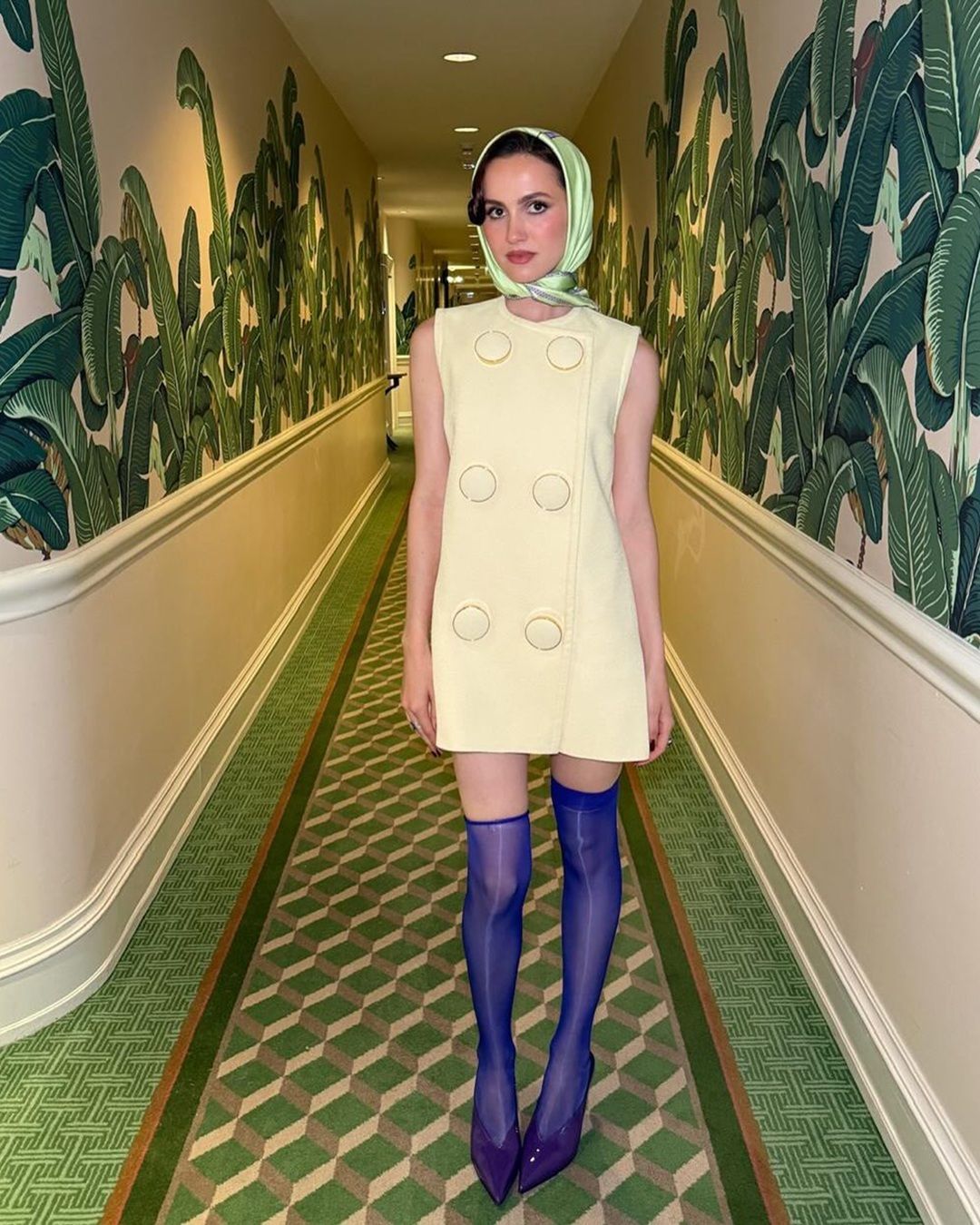

There is a version of “classy” that looks right on the surface…
…but feels slightly off in real life.
You have probably seen it.
Maybe even tried it.
Everything appears polished.
Everything seems intentional.
And yet…
It does not land the way it should.
Because class is not judged slowly.
It is perceived instantly.
And small misalignments show faster than most people realize.
1. Matching Everything Perfectly
At first glance, this seems like the safest approach.
Matching bag, shoes, accessories.
Coordinated colors. Clean symmetry.
But perfect matching often feels predictable, not refined.
In design psychology, environments that feel too uniform can come across as less sophisticated because they lack variation and depth.
High-end spaces and by extension, high-end style rely on contrast and subtle imbalance.
That is what creates interest.
True refinement is not about everything matching.
It is about everything belonging together without looking forced.
2. Overly “Careful” Movement

Many women try to move in a way that looks elegant.
Slower steps. Controlled gestures. Perfect posture.
But when it becomes too controlled…
It reads as tension.
Behavioral research shows that people are highly sensitive to micro-movements small, almost invisible signals that indicate whether someone is relaxed or not.
When movement feels restricted, it often signals:
- self-consciousness
- discomfort
- or overcorrection
None of which align with confidence.
Elegance is not stiffness.
It is ease with awareness.
3. Using “Luxury” Items Too Obviously
This is subtle but powerful.
Wearing recognizable designer pieces.
Displaying brand-heavy accessories.
Highlighting expensive items.
It seems like it should signal class.
But studies on status perception consistently show that subtle signals are interpreted as higher status than obvious ones.
Why?
Because understated choices suggest:
- security
- familiarity
- and lack of need to prove anything
Overt signals often do the opposite.
The more something tries to be noticed…
the less refined it feels.
4. Speaking Too Formally In Casual Settings


There is a misconception that elegance means sounding polished at all times.
Perfect grammar. Carefully chosen words. Formal tone.
But communication research shows that social alignment matters more than precision.
If your tone feels out of place for the setting…
It creates distance.
And distance is often perceived as discomfort—not refinement.
Class is not about sounding elevated.
It is about sounding appropriate and natural.
5. Over-Editing Your Personality
Trying to be:
- quieter
- softer
- more reserved
On the surface, this seems aligned with elegance.
But when personality becomes too filtered…
It loses clarity.
And people pick up on that quickly.
Psychologically, humans trust consistent signals.
When behavior feels overly managed, it creates subtle doubt.
Not because anything is wrong…
But because it feels incomplete.
Elegance is not about becoming less of yourself.
It is about becoming more intentional with what you show.
6. Prioritizing Trends Over Timelessness
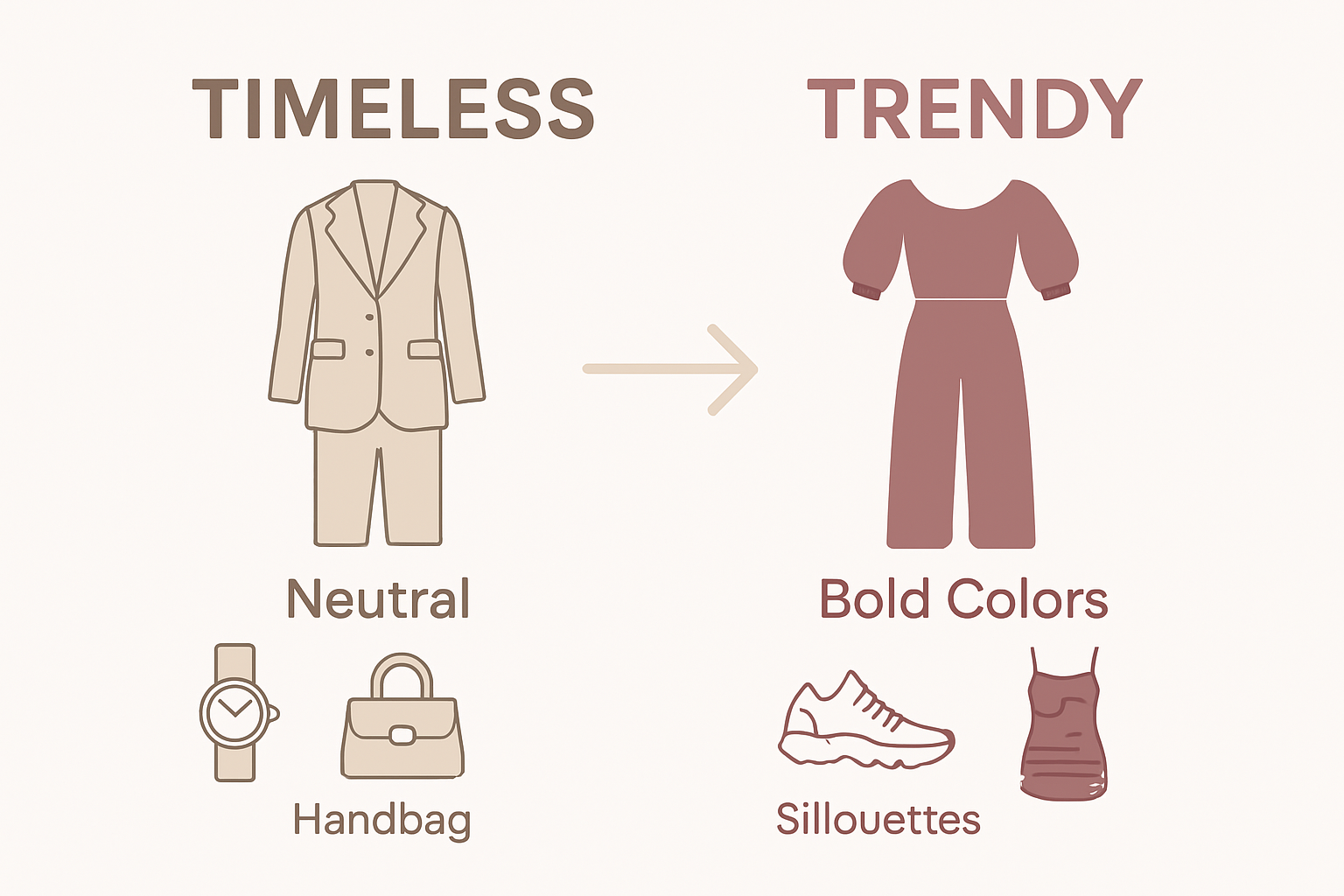


Trends move quickly.
Elegance does not.
Following every shift in style can create a look that feels current…
…but not grounded.
In fashion theory, timeless style works because it reduces visual noise and increases recognition.
People process it faster.
And anything processed easily is often perceived as more refined.
Timelessness signals clarity.
Trends signal movement.
And too much movement feels unstable.
7. Trying To Eliminate All Imperfection
This might be the most surprising one.
Many people believe elegance requires perfection.
Perfect outfit.
Perfect home.
Perfect presentation.
But in both design and psychology, slight imperfection actually increases appeal.
It creates:
- warmth
- realism
- memorability
This is why overly styled environments often feel less inviting.
And overly “perfect” people can feel harder to connect with.
Refinement is not perfection.
It is control without rigidity.
The Real Pattern Behind All Of This


If you look closely, all of these mistakes share one thing:
They try too hard to signal class.
Instead of allowing it to be perceived naturally.
And perception whether in style, behavior, or presence is shaped quickly.
Often before you say anything at all.
Class is not built through perfection, matching, or visible effort.
It is built through alignment.
Between how you look…
how you move…
and how you show up.
Because the moment something feels forced…
People notice.
Even if they cannot explain why.
What is something you used to think looked classy but now see differently?
